

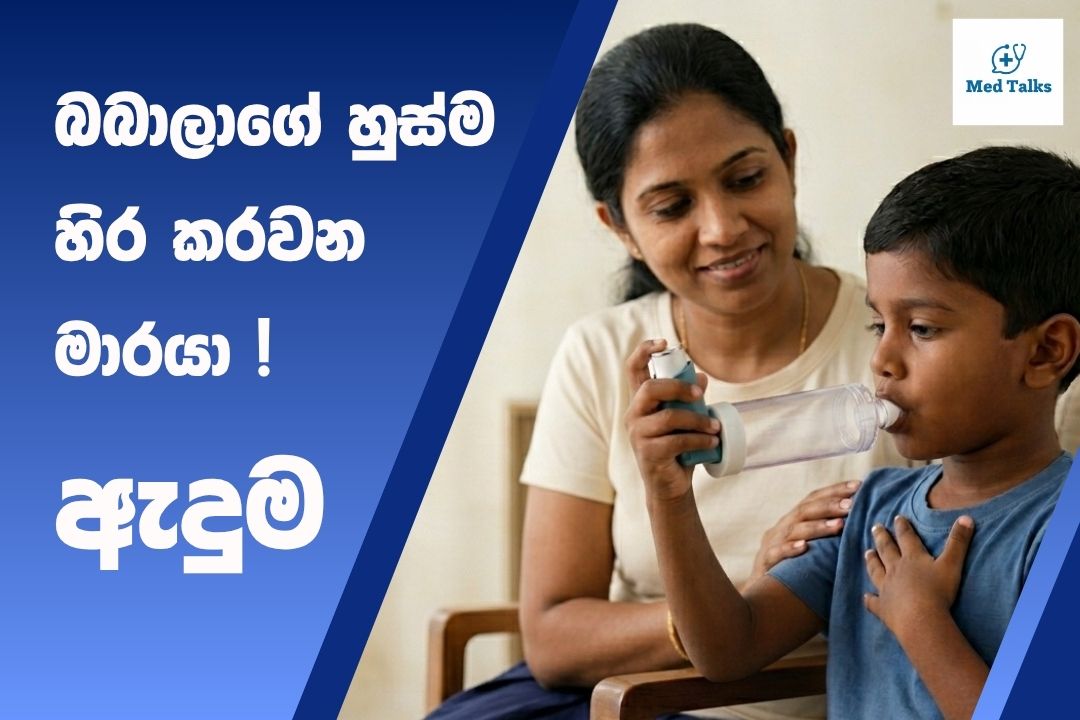
Let’s talk about a silent “threat” that can make a small child struggle to breathe — Asthma.
Asthma is a disease of the respiratory system that affects children. In this condition, the airways that carry air into the lungs become narrow due to various triggers. When this happens, the child develops wheezing — a whistling sound while breathing. They may also experience difficulty in breathing, coughing, and a tight feeling in the chest.
These symptoms often become worse at night and early in the morning. Because of breathing difficulty, the child’s sleep can be disturbed. It may also affect their school attendance and participation in sports.
If a family member has asthma, the child has a higher risk of developing it as well.
In addition, viral infections of the respiratory tract, cigarette smoke, allergy-triggering substances, cold weather, and exercise can also trigger asthma. Therefore, preventing exposure to these triggers is important in controlling the condition.
The main treatment for a child with asthma is inhalers. It is very important to use inhalers correctly and continue them for the full duration prescribed by the doctor.
A common mistake many parents make is stopping the inhaler once the child’s symptoms improve. This can lead to poor control of asthma and recurrence of symptoms.
Generally, children with asthma are prescribed two types of inhalers:
The first type is a daily preventive inhaler that helps control asthma and prevents flare-ups.
The second type is a relief inhaler used during sudden worsening of symptoms, such as when the child develops wheezing and difficulty breathing.
These two inhalers should not be confused, and they must be used exactly as prescribed by the doctor.
Proper management and consistent treatment can help children with asthma lead a normal, active life.