

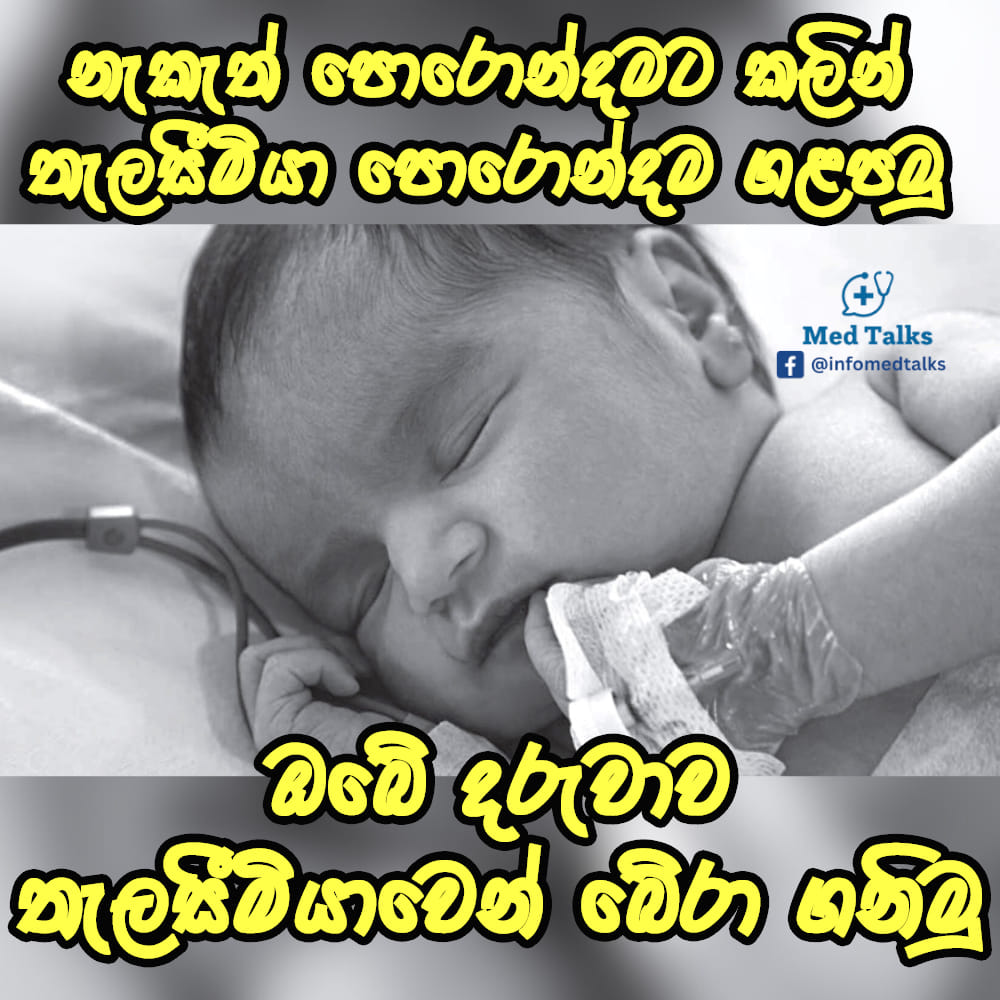
Save Tomorrow’s Child from Thalassaemia: Why Pre-Marital Screening Matters
Did you know that a simple blood test before marriage can help prevent a child from being born with thalassaemia?
Red blood cells carry oxygen from your lungs to the rest of your body. They are red because they contain haemoglobin, a protein that enables oxygen transport. In people with thalassaemia, the production of globin, an essential component of haemoglobin, is impaired.
As a result, their red blood cells break down much faster than normal. While a healthy red blood cell lives for about four months, a red blood cell in a person with thalassaemia may survive for only one month.
What are the symptoms of thalassaemia?
Children with thalassaemia usually develop symptoms within the first year of life, including:
- Anaemia due to the rapid destruction of red blood cells, causing pale skin, reduced activity, and sometimes difficulty feeding or shortness of breath.
- Enlargement of the liver and spleen, leading to a swollen abdomen and jaundice (yellowing of the skin and eyes).
- Changes in facial appearance caused by expansion of the bone marrow.
- Iron overload resulting from frequent blood transfusions and red blood cell breakdown. Excess iron can accumulate in organs such as the liver and heart, as well as hormone-producing glands like the pancreas and pituitary gland, reducing their function.
- Poor growth and increased susceptibility to infections.
How is thalassaemia inherited?
A child inherits genes from both parents. These genes determine how the body grows and functions. If a gene is abnormal, it can lead to an inherited disease such as thalassaemia.
A person may carry an abnormal thalassaemia gene without having the disease. Such individuals are known as thalassaemia carriers.
If both parents are carriers, each pregnancy has:
- 25% chance of producing a child with thalassaemia,
- 50% chance of producing a carrier child, and
- 25% chance of producing a child with normal genes.
If only one parent is a carrier, the child may become a carrier but will not develop thalassaemia.
Therefore, if at least one parent is not a carrier, there is no possibility of having a child with thalassemia.
How can thalassaemia be prevented?
Before choosing a life partner, undergo a thalassaemia screening blood test to determine whether you are a carrier.
- If you are a carrier, you will receive a pink card.
- If you are not a carrier, you will receive a green card.
If you receive a pink card, it is recommended to avoid marrying another person who also has a pink card, as this significantly increases the risk of having a child with thalassaemia.
Thalassaemia in Sri Lanka
It is estimated that around 3% of the Sri Lankan population are thalassaemia carriers. Patients are identified throughout the country, with higher numbers reported in the North Central, North Western, Uva, and Central Provinces.
By undergoing pre-marital thalassaemia screening, we can help prevent the birth of children with thalassaemia and contribute to a healthier future generation.
For information about screening:
- Thalassaemia Relief Centre, Ragama: 011 295 9642
- Thalassaemia Centre, Kurunegala: 037 222 2261 / 62
- Thalassaemia Centre, Anuradhapura: 025 222 2261
- Thalassaemia Centre, Badulla: 055 222 2261