

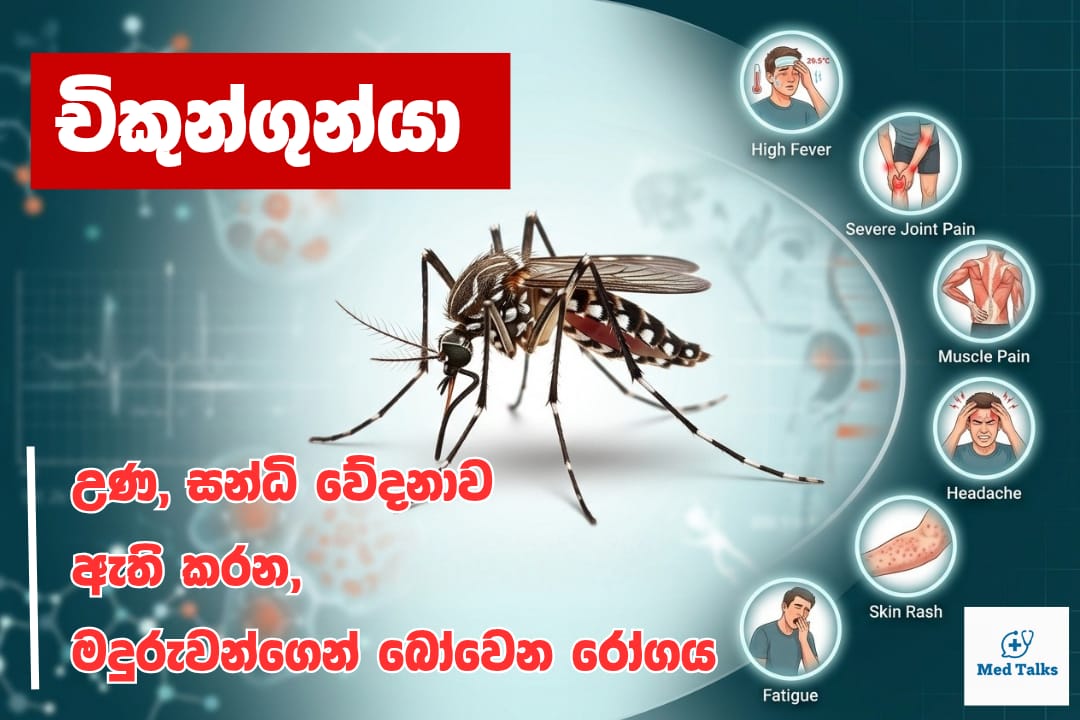
There has been a significant increase in reported cases of Chikungunya infection in recent times.
If an infected mosquito bites you, the virus carried in the mosquito’s body can enter your bloodstream and cause the disease.
What are the symptoms of Chikungunya?
Common symptoms include:
- Sudden onset of fever
- Joint pain and swelling
- Muscle pain
- Headache
- Nausea
- Fatigue and weakness
- Skin rash
If you experience these symptoms, it is important to seek medical attention as soon as possible.
Children who spend more time outdoors are at higher risk of mosquito bites and infection.
How does Chikungunya spread?
Chikungunya is spread by the same mosquito species that transmit dengue.
These mosquitoes are most active during:
- Early morning
- Late afternoon/evening
To prevent mosquito bites, it is important to:
- Avoid unnecessary outdoor exposure during these times
- Wear long-sleeved clothing
- Use mosquito nets and repellents
Symptoms usually appear 4–8 days after a mosquito bite.
Can Chikungunya be cured?
Yes. In most cases, Chikungunya is a self-limiting illness and patients recover completely.
However, joint pain may persist for weeks or even months after the infection.
Certain groups are at higher risk of severe illness, including:
- Newborn babies
- Elderly individuals
- People with existing medical conditions
How can Chikungunya be prevented?
There is no direct person-to-person transmission. The disease spreads only through mosquito bites.
Therefore, the most important prevention method is controlling mosquito breeding sites.
During rainy seasons, stagnant water can collect in:
- Flower pots
- Buckets
- Old tyres
- Blocked drains
These are ideal breeding places for mosquitoes.
Cleaning and removing stagnant water is your responsibility and plays a major role in preventing both Chikungunya and Dengue.