

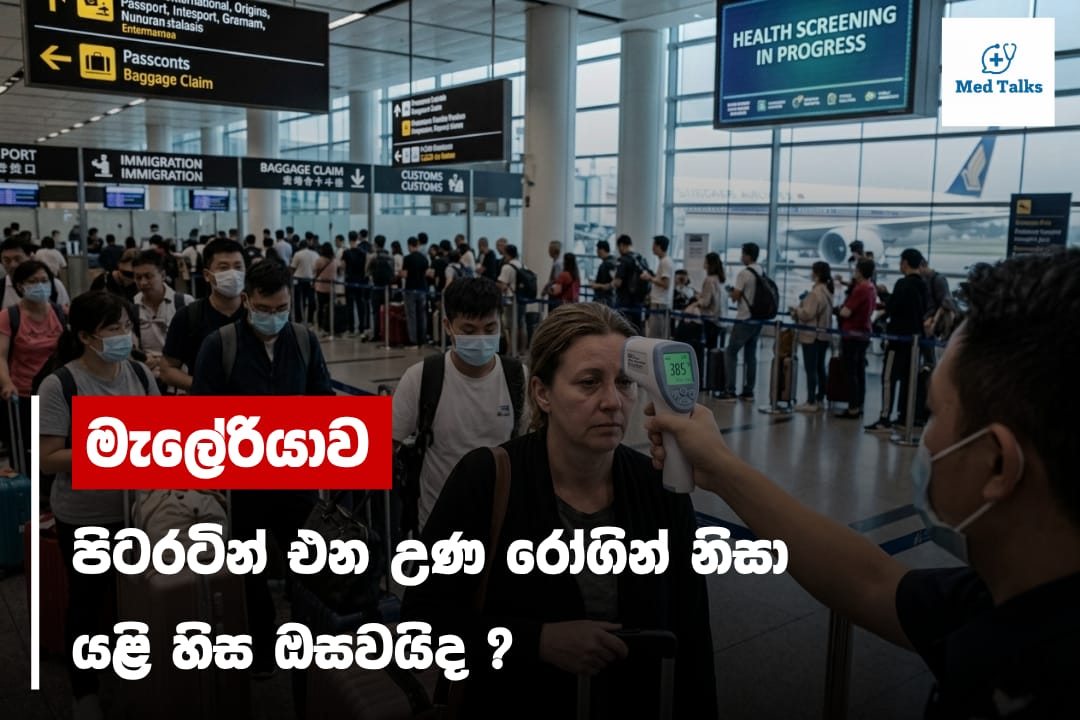
Is malaria, the deadly disease, making a comeback due to fever cases coming from abroad?
Malaria is caused by the Plasmodium parasite, which enters the human body when an Anopheles mosquito bites.
Malaria status in Sri Lanka
Although locally transmitted malaria cases (endogenous cases) are currently not present in Sri Lanka, there is still a significant risk of reintroduction of the disease due to infected travelers arriving from abroad.
This is especially concerning because the Anopheles mosquito, which transmits malaria, is still present across many parts of the country.
Why is vigilance important?
If malaria is suspected, it is important to seek medical treatment immediately. As a citizen, this is your responsibility in preventing the spread of the disease.
When should you suspect malaria?
You should consider the possibility of malaria if:
- You have recently returned from a country where malaria is common
- You develop fever after traveling
High-risk regions include:
- African countries such as Nigeria, Congo, and Ghana
- Certain Asian countries
- Latin American countries
- Some Middle Eastern countries
Symptoms of malaria
You should seek urgent medical care if you experience:
- High fever occurring every 2–3 days
- Headache
- Muscle pain
- Fatigue and weakness
Final message
Preventing malaria from becoming a public health threat again in Sri Lanka is a shared responsibility.
Early detection and prompt medical treatment are essential to stop the disease from spreading.