

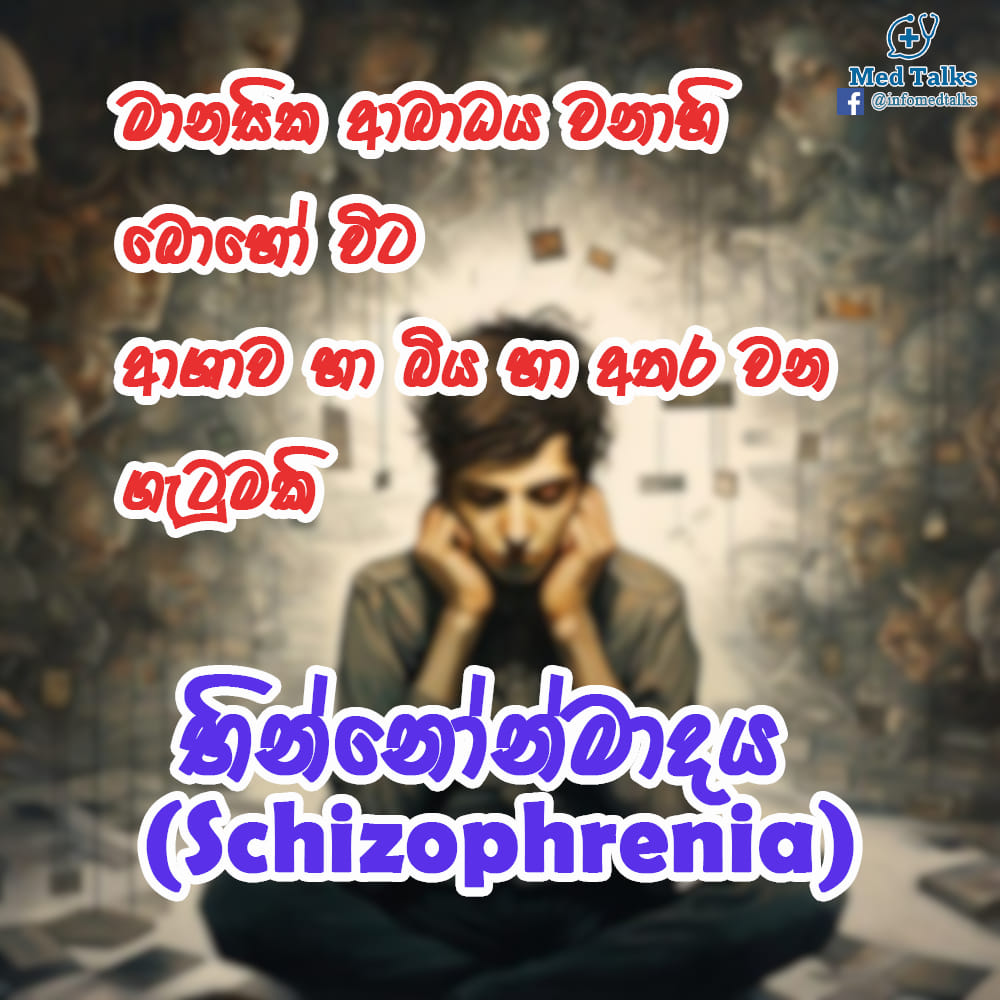
“Do you know someone who says things like, ‘I am Goddess Kali’ or ‘I have divine powers to cure illnesses? If you know someone like this, you should urgently guide them to psychiatric treatment. They may be showing signs of schizophrenia.
A person with schizophrenia does not perceive the world, hear things, or experience reality in the same way we do.
Imagine you are alone in a room and you hear someone speaking to you. The strange part is that you cannot see the person speaking. And it is not even your own thoughts. This symptom is known as third-person auditory hallucinations.
You may hear a voice, but the unusual aspect is that it describes what you are doing and what you are feeling—almost like a radio commentator narrating your life. This is known as running commentary auditory hallucinations.
When you are thinking about something, you may feel as if someone is inserting thoughts into your mind. You may feel that the thoughts are not your own.
Alternatively, you may feel as if your thoughts are being taken away by someone else, leaving gaps in your thinking.
You may also believe that your thoughts, even if not spoken aloud, are being heard by everyone else.
These symptoms are known as thought insertion, thought withdrawal, and thought broadcasting.
In addition, people with schizophrenia may hold strong false beliefs. For example, believing they have divine powers or special abilities. This is known as a grandiose delusion.
They may also interpret ordinary things, like the direction a pen is pointing on a table as having a deep personal meaning, such as a sign that they will die and this is called delusional perception.
Some may feel that their body is being controlled by someone else and that their movements are not their own. This is known as somatic passivity.
Schizophrenia occurs due to changes in a person’s thoughts, emotions, and perceptions.
The causes may include:
- Structural changes in the brain or chemical imbalances in the brain.
- A higher risk if there is a family history of the condition.
- Increased risk in individuals who have experienced childhood trauma or sexual abuse.
People with schizophrenia may also be vulnerable to other mental health conditions such as depression, substance addiction, family conflicts, and social difficulties. They also have a higher risk of suicide.
If you or someone you know shows these symptoms, seek psychiatric treatment as soon as possible.
With medication and family support, the condition can be effectively managed, allowing individuals to lead a normal life.”